Heated Rivalry’s Depiction of Suicide Loss Lets Viewers Know It’s Okay to Talk About It… and Shows How to Do So
February 24, 2026 – 7 min read
By Brett Wean, AFSP Senior Director of Writing and Entertainment Outreach
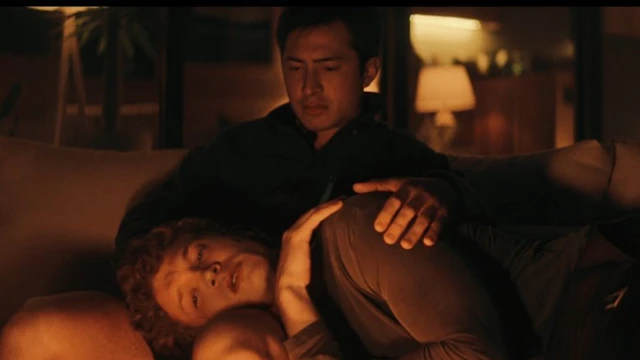
If you’re anything like me, your entire Instagram feed suddenly became nothing but Heated Rivalry reels a few weeks ago.
Also if you’re like me, and you binged your way through all six episodes of Heated Rivalry’s first season, perhaps the reason you were particularly hyped about it wasn’t just the wonderful way it treated LGBTQ+ representation, but the way it handled the topic of suicide loss.
Before I get into specific plot details — nothing too major, but an emotionally significant bit of one character’s backstory revealed in the last episode — this is your last chance to avoid spoilers. So picture me out on the ice. We go to slow motion as I expertly swing my stick at the puck, every micro-second expanded, allowing us to luxuriate in my utterly perfect form.
Slow-mo ends and we switch back to real time as I slap that puck right in the net. It’s spoiler time, baby!
Let me explain what happens in my brain every time the topic of suicide pops up in a show or movie I’m watching. Aside from my own personal connection to the subject — I lost my mom to suicide — I’m the Senior Director of Writing and Entertainment Outreach at the American Foundation for Suicide Prevention. That means I often get to advise the entertainment industry on safe and accurate (and hopefully creative and forward-thinking) depictions of suicide in popular culture. So when I’m watching something in my free time and the subject comes up unexpectedly, my heart sinks into my stomach as I process whether I feel it’s handled safely, or in what may be an unintentionally dangerous way for audience members who may happen to be at risk.
I was really enjoying Heated Rivalry: it had been giving me all the fun soap opera aspects I wanted, plus exciting sports drama, while delivering a level of psychological depth beyond what I would have expected. So even more so than usual, as I hit a certain scene in the first season’s final episode, I was in suspense as to how the story handled this topic.
Picture us in slow-mo again. Heated Rivalry skates down the court, swings its stick… and nothin’ but net! Score!
The episode contains two scenes involving suicide loss: one in which Ilya discloses to Shane that his mother died by suicide; we hear Shane’s response in that moment, and again in a later scene, after he’s had time to think more about it. Both scenes delivered on everything I wanted as a survivor of suicide loss, as well as what I want other people to hear.
What stands out to me most is how, in a show that concerns itself so deeply with men feeling uncomfortable or unable to speak openly about their lives and emotions, in the two main characters’ private moments together — now that they’ve carefully built a sense of trust with each other — every sentence is incredibly weighted with meaning. It’s a big deal that Ilya opens up in this way, not just because his family back in Russia doesn’t talk about his mother’s death being by suicide, but because many people, the world over, still feel shame around the subject. Now that Shane and Ilya have built trust, and are sitting over a cozy fire at the cottage, neither of them is wasting any time once Ilya — perhaps not expecting to, in that moment — opens up.
In stories, focusing too heavily on details related to the lethal means used in a suicidal act can be dangerous for some people in the audience who are already in a vulnerable state. But the way Ilya mentions it here is brief, and serves the purpose of efficiently, sardonically acknowledging that his family isn’t open about his mom’s suicide:
SHANE: “I’m sorry about your family. Even if they sucked, you must miss them.”
ILYA: “My mother didn’t suck. She was great.”
SHANE: “How did she die?”
ILYA: “By accident.” (Brief pause.) “She accidentally swallowed the whole bottle of pills.”
Notice how Shane doesn’t flail his arms and exclaim, “What? Oh my god!” etc. Instead, now that their walls of secrecy have come down and they have this limited time together, he doesn’t miss a beat:
SHANE: “How old were you?”
ILYA: “Twelve. I found her.”
There is a slight pause before Ilya continues; and in my opinion, it feels like what Ilya says next is the most important thing on his mind, and something he’s been holding onto for a long time after not talking about this with anyone:
ILYA: “I don’t want you to think she was weak.”
SHANE: “I don’t.”
The way Shane reassures Ilya about this, so simply and without hesitation, feels incredibly powerful to me. Ilya continues:
ILYA: “She wasn’t. She was so funny and beautiful. She was so sad.”
It’s around here that the scene gets cut short by a bird cawing. (Stupid Canadian wolf bird!)
I love how Shane responds to Ilya about this death by suicide in the same neutral way he might respond if the death had been caused by a physical condition. We know from research that suicide is the tragic outcome of a complex health crisis; that it involves the brain; that it’s never as simple as being caused by a single life stressor; and that decision making is impaired for those in a suicidal crisis. Shane doesn’t treat the information as though something outlandish outside the realm of human understanding has occurred. He’s calm, and respectful, and even with Ilya’s nods toward the lethal means used and the fact that he found his mom, Shane doesn’t respond with prurient questions about the physical reality of the situation. He simply gives Ilya space to talk, lets him know he has his full attention, and reassures Ilya that he doesn’t interpret his mother as being weak. Suicide isn’t about being weak or strong, any more so than having cancer or heart disease is about being weak or strong. It’s a health-related situation.
I also love that Shane follows up about this conversation later on. So often, people aren’t sure how to respond to someone telling them about their personal connection to suicide. Consequently, they never bring it up again — unintentionally sending the message that suicide isn’t okay to talk about. (You can educate yourself on how to safely and comfortably talk about it through the #RealConvo Guides included in AFSP’s Talk Away the Dark campaign.)
In a later scene in the episode, Shane not only circles back to communicate that he’s still there for Ilya to talk about this subject, but also that he has actively been thinking about it, himself:
SHANE: “What was your mother’s name?”
ILYA: “Irina. Why?”
SHANE: “I was thinking we could start a hockey school. Like a summer camp for kids. And give the money away to mental health organizations, and suicide prevention. It was just an idea.” (I’ll just leave this link here, and mention that the American Foundation for Suicide Prevention consistently earns a perfect score on Charity Navigator.)
The relief and appreciation in Ilya’s trademark stoic voice is subtle, but palpable:
ILYA: “She would have loved you. Like I love you.”
To Ilya, someone truly seeing his mother, through his shared memory of her, and not simplifying her identity as a reflection of how she died, means everything. Shane asks her name. This is what love is, for the two of them, in this moment. Shane’s love for Ilya is displayed in the respect and care in which he receives this loss.
And so we have a hat trick (hockey term for three or more goals by a player in a single game) of great components related to Heated Rivalry’s depiction of suicide loss:
I love that Shane gives Ilya space to share about his suicide loss, listening without judgment and not asking details about the lethal means used. I love that he shows that he sees Ilya’s mom as having her own full identity and personality, not defined by the fact that she died by suicide. And I love that he follows up at a later time, sending the message that he’s around whenever Ilya might want to talk about it in the future.
It’s so important that we all feel, as a society, that suicide is something we not only can, but must, talk about openly, like any other leading cause of death. I’m grateful for positive depictions of how to do so in popular entertainment, which help us move toward a place where we all become comfortable doing so.
Learn about the support available for survivors of suicide loss.