Kitchen Un-Confidential: Grappling with the Topic of Suicide in a Film about Anthony Bourdain
August 24, 2026 – 5 min read
By Brett Wean, AFSP Senior Director of Writing and Entertainment Outreach
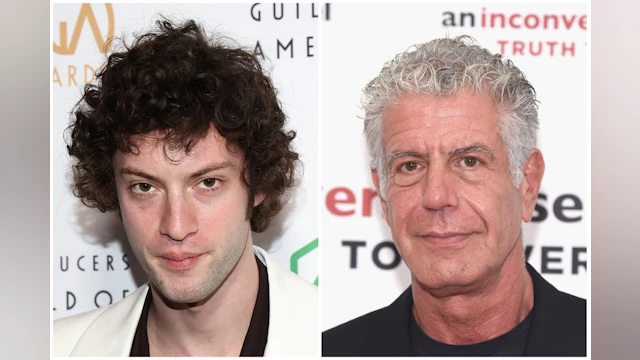
I approached the new movie “Tony,” about the celebrity chef, author and television star Anthony Bourdain, who died by suicide in 2018, with the same trepidation and curiosity I always first view entertainment involving the topic of suicide –– eager to discover whether it handles the subject sensitively, in such a way that it might elevate peoples’ understanding; and nervous as to whether it does so safely for viewers who may be in a vulnerable state.
A biopic about Bourdain presented an interesting challenge, and I wasn’t sure, going in, what I felt the best possible approach might be. Bourdain was –– and is –– a particularly beloved personality. He was sophisticated in his understanding of cuisine; yet down-to-earth and unpretentious in his appreciation of it. He was funny and charming and what I would describe as sensitively macho. Most of us couldn’t help but love him, and felt devastated when his life was cut short by his suicidal distress. His death caused a particularly emotional reverberation in our culture, and still does to this day, coming as it did so close on the heels of designer Kate Spade’s own death by suicide just three days earlier.
It’s natural for us to mourn a well-loved personality, and our collective grief takes on an understandable and bitter flavor when they die seemingly of their own choosing. However, for those of us familiar with the scientific research around suicide, which clearly shows that thinking is affected for individuals in the midst of a suicidal crisis, that seeming “choice” might be understood more accurately as an illusion.
But sometimes, when our public grief over a celebrity who’s died by suicide goes on for a long period of time – with too emotional a weight attached to it without the accurate clinical framing of their death as the tragic outcome of a real and serious health crisis –– it can begin to feel dangerous for people who may be at risk: an unintentional glamorization of the manner of their death, overly romanticized to the point that it runs the risk of sparking what’s known as contagion, and potentially endangering vulnerable individuals.
This was my concern going into the screening when the film debuted in New York ahead of its national release. But I was also genuinely excited to see the movie, which stars the young actor Dominic Sessa, who I’d so loved in “The Holdovers,” and who seems to be cornering the market on playing 70s-era coming-of-age story protagonists. (A genre known in German literature as a bildungsroman, or as young Tony mispronounces in the movie, “buildings-roman.”) The trailer promised a fun and energetic look at an early, wild period of Bourdain’s life: a summer in which he discovered his passion for cooking, shortly before dropping out of Vassar to head over to the nearby Culinary Institute of America, also conveniently located in Poughkeepsie, New York. (He’s in good company: other famous Vassar dropouts include Jane Fonda and Ad-Rock.)
The choice to focus the movie entirely on this early and specific part of Bourdain’s life, rather than going full biopic lifespan to include the leadup to and tragic ending of his life, is ultimately what dazzled me with its elegant handling of the manner of Bourdain’s death. I was nervous, as I watched, as to whether the film would hammer home his death by suicide with ominous foreshadowing, or leap forward in time at the end to reveal his heartbreaking death. I also didn’t know whether to expect a written message on screen at the movie’s close, remarking on how he died; or exactly how I felt would be the safest way to handle that. (Rare for me, as a large part of my job at the American Foundation for Suicide Prevention involves consulting with the entertainment industry on safe depictions of suicide in popular entertainment. Anyone interested in learning more about how to creatively apply the research-based guidelines on this subject can consult our new Safe Storytelling Studio, which also includes best practices for journalists and social media creators.)
The movie, directed and co-written by Matt Johnson, of the duo behind last year’s extremely funny “Nirvanna the Band the Show the Movie,” doesn’t avoid the topic of suicide entirely, which would have felt like a misstep to me. (His previous film is exceptionally silly while also slyly managing to be a bittersweet meditation on friendship, aging, and disappointment –– so perhaps he was the perfect choice to navigate this delicate balance.)
Rather than melodramatically leaning into this aspect of the story, there is only a single short bit of dialogue in “Tony” involving suicide, which viewers may choose to view as either a quick nod to the elephant in the room, or (as I do) as an elegant answer to the question of how the film would contend with this topic surely at the forefront of many moviegoers minds. The subject, when it is raised, is not in relation to young Tony’s own psychological state, but in reference to an historical figure; and the brief bit of dialogue lands squarely on the one word which so often represents the extent of our paradoxically simple and complex reaction to such a death: “Why?”
Everyone will have their own individual response to the film. But the decision not to dwell on Bourdain’s eventual suicide many years in the future, and to instead address it briefly and pointedly in one short bit of thoughtful dialogue, strikes me as the perfect balance, allowing its representation of Bourdain to focus squarely on his life, rather than his death.
And so, while nodding to the shadow most viewers will recognize is looming over the end of Bourdain’s life, the film instead feels refreshingly hopeful to me, rather than gloomily or dangerously tragic –– because in looking towards the future of the movie’s protagonist, we know of the many good and happy things that still awaited Tony, which he was barely on the cusp of hoping for himself. Director Johnson, in an interview about the film, remarked, “I think that this movie and Bourdain both tell us that wherever you are, it’s not too late.”
Bourdain’s suicide, therefore, in the context of the film, feels less like a matter of fate or destiny, and more accurately as the likely avoidable, health-related tragedy that it was. For after all, we realize as the end credits roll, there was still so much for our young friend Tony to look forward to. He just couldn’t see it for himself.
Read Brett Wean’s article on the depiction of suicide loss on “Heated Rivalry” here.